Comment on APsA Elections from Lucas Klein

I would like to weigh in here on the issue of the Holmes report and the ideas that have followed in its wake. I realize that many of you will not be receptive to what I have to say, but on the chance that there are still those inclined toward the use of empiricism at the organizational level, here goes.

My greatest concern for modern society is that there is a growing tendency for individuals and groups to stand firmly on inner convictions in the absence of robust external evidence. This problem is at the core of many evolving social and political issues plaguing America and the western world at present.

It should be stated that racial discrimination is illegal in the U.S.; so if there is compelling evidence that race is actually used to exclude or administratively discriminate against any race, the Department of Justice would need that data in order to proceed in a civil rights case. They would require well documented evidence. If such evidence existed, I and many others would aid in the facilitation of correcting an identifiable discriminatory practice at the organizational level.

However, I would think that any group of scholars who endeavored to characterize their professional organization as an extension of “white supremacy” (a term found 151 times in the Holmes report) would come to that conclusion only after rock solid data had led them to such a claim.

The Holmes report is no such document; it lacks serious research methodology. The paper reads more like a religious tome, its very opening statements of the problems are circular and include many non sequiturs, and the outcomes are based merely on subjective reports. There is no actuarial evidence to support any of the few trends found in the subjective reports. There is not even a proper methods or results section. Have any of you ever read a legitimate empirical social sciences study Continue reading Comment on APsA Elections from Lucas Klein


POETRY MONDAY: NOVEMBER 6, 2023

David Giannini


Good morning, everyone!  As we did last month, we’re sharing some readers’ favorites for those who may have missed them the first time.  David Giannini last appeared here in 2022.  Since then, his latest book, Already Long Ago (Dos Madres, 2023) is already garnering high praise.

                     –Irene Willis
                       Poetry Editor


A Woman in the Asylum on the River

Even in my mother’s womb
I sensed that

I could not escape without help; that there Continue reading POETRY MONDAY: NOVEMBER 6, 2023

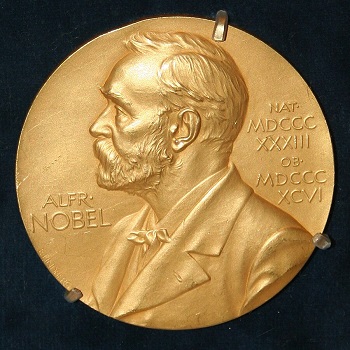
Nobel Prize in physics won by trio who created rapid flashes of light to ‘capture the shortest of moments’

Click Here to Read: Nobel Prize in physics won by trio who created rapid flashes of light to ‘capture the shortest of moments’ By Christian Edwards, Katie Hunt and Ed Upright on the CNN website on October 3, 2023.

Noble Prize.  Image: Sculptor and engraver: Erik Lindberg (1902), Photographer: Jonathunder (2008-11-01).  Public Domain via Wikimedia Commons.

K

With God on Our Side by Bob Dylan

Here’s another Dylan song, not as well known as “Blowin in The Wind” but as relevant today as it was in 1964. It’s worth a read if not a listen for all of us..
Shelly

With God on Our Side
https://www.youtube.com/watch?v=5y2FuDY6Q4M


WRITTEN BY: BOB DYLAN 
Oh my name it is nothin’
My age it means less
The country I come from
Is called the Midwest
I’s taught and brought up there
The laws to abide
And that the land that I live in
Has God on its side
Continue reading With God on Our Side by Bob Dylan

Freud and the Ludic Mind: New Ideas in Psychoanalysis From IPBooks

Click Here To Purchase Freud and the Ludic Mind: New Ideas in Psychoanalysis by Francisco Lafaiete Lopes.

Freud and the Ludic Mind: New Ideas in Psychoanalysis

What would happen to psychoanalytic theory if, instead of adopting the death drive──drive toward death and destruction──Freud had chosen to conceptualize the ludic drive, merely mentioned by him in his studies?

Freud and the ludic mind: new ideas in psychoanalysis were initially written for readers with a psychoanalytic background, but other readers may also take advantage of it. The psychoanalyst will see what happens when the author introduces the hypothesis of a ludic drive into the classical Freudian model──an impulse for living an active life, a life in which one is all the time doing, feeling, talking, listening, or imagining something. He hypothesizes that the ludic drive results from an innate intolerance for inactivity. The result is a new theory of the mind that, in a peaceful and nonexclusive way, incorporates many recent developments of psychoanalysis into the classical Freudian construction. It opens a wide range of new possibilities for clinical activity.
This book provides a broad and profound reflection on possible paths of psychoanalysis, with a theoretical framework built on contributions by Freud, Hartmann, Alexander, Hendrick, Mahler, Winnicott, Kohut, Melanie Klein, Bowlby, and others. It merges the core ideas of major psychoanalysis schools Continue reading Freud and the Ludic Mind: New Ideas in Psychoanalysis From IPBooks