
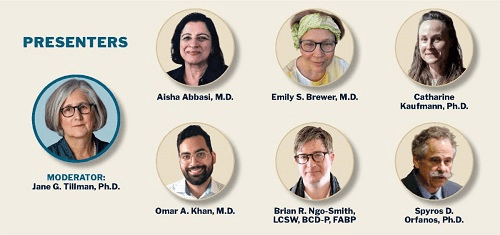
On June 13th, APsA brought together our community for the Summer Symposium: Reimagining Engagement at Psychoanalytic Institutions and the conversation did not disappoint.
Moderated by Dr. Jane Tillman (Austen Riggs Center), the panel featured six clinicians and educators at different career stages and institutional vantage points. Dr. Tillman’s opening questions, “what is a psychoanalytic institution for and what does it mean to belong to one” invited the panelists to think about what every potential member is asking. What unfolded was a candid and compelling exchange about what it means to belong. Here are six takeaways from the discussion:
1. THE REAL ENGAGEMENT CRISIS ISN’T APATHY
Brian R. Ngo-Smith reframed the question entirely and asked if institutions have learned to share their future. He left the room with a provocation: can we create institutions in which authority and affection coexist?
2. INSTITUTES CARRY AN UNCONSCIOUS
Dr. Spyros D. Orfanos observed that institutions devoted to understanding unconscious life are often the most defended against it. His challenge to the room: we need to point our analytic instruments at ourselves.
3. SAFETY REQUIRES POWER NOT JUST EMPATHY
Dr. Emily Brewer argued that institutional safety depends on someone with actual authority being willing to act — not just listen. The empathetic ear matters, but without the power to intervene, trust cannot be built or repaired.
4.IGNORING ECONOMICS OF ENGAGEMENT
Dr. Cassie Kaufmann named something important to consider: the material realities facing younger clinicians are in direct conflict with how most psychoanalytic institutes have historically structured engagement. Membership dues, training costs, fees for events and sessions, all accumulate into a barrier that those same institutions have been slow to reckon with.
5.IMPROVING PUBLIC PRESENCE
Dr. Omar Khan described his frustration at how little psychoanalysis exists online and in media in comparison to other therapies. There is no Khan Academy equivalent despite enormous public appetite for exactly this kind of thinking. His vision: a Cosmos-style series for psychoanalysis. Paging the next Neil deGrasse Tyson of psychoanalysis!
6.THEORY OF LIBERATION
Dr. Aisha Abbasi closed with a provocation borrowed from Michael Moskowitz: psychoanalysis remains the only comprehensive theory of human liberation. That, she argued, is the guiding principle institutions should gather people around — and the basis on which they might re-engage those who’ve left feeling excluded or unheard.