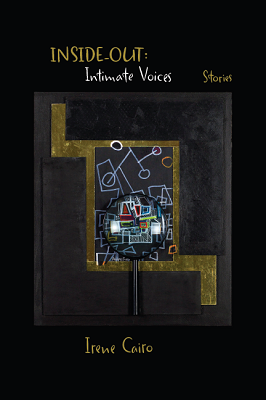
Stories by Irene Cairo (Click title above to purchase) from IPBooks.net
Click Here to Read the Review by Joan Baum

Click Here To Purchase Freud and the Ludic Mind: New Ideas in Psychoanalysis by Francisco Lafaiete Lopes.
Freud and the Ludic Mind: New Ideas in Psychoanalysis
What would happen to psychoanalytic theory if, instead of adopting the death drive──drive toward death and destruction──Freud had chosen to conceptualize the ludic drive, merely mentioned by him in his studies?
Freud and the ludic mind: new ideas in psychoanalysis were initially written for readers with a psychoanalytic background, but other readers may also take advantage of it. The psychoanalyst will see what happens when the author introduces the hypothesis of a ludic drive into the classical Freudian model──an impulse for living an active life, a life in which one is all the time doing, feeling, talking, listening, or imagining something. He hypothesizes that the ludic drive results from an innate intolerance for inactivity. The result is a new theory of the mind that, in a peaceful and nonexclusive way, incorporates many recent developments of psychoanalysis into the classical Freudian construction. It opens a wide range of new possibilities for clinical activity.
This book provides a broad and profound reflection on possible paths of psychoanalysis, with a theoretical framework built on contributions by Freud, Hartmann, Alexander, Hendrick, Mahler, Winnicott, Kohut, Melanie Klein, Bowlby, and others. It merges the core ideas of major psychoanalysis schools Continue reading Freud and the Ludic Mind: New Ideas in Psychoanalysis From IPBooks
Click Here to Download to View: Primal Neuroanthropology: A NeuroCreativity Project Educational Conference by Kenneth Gross
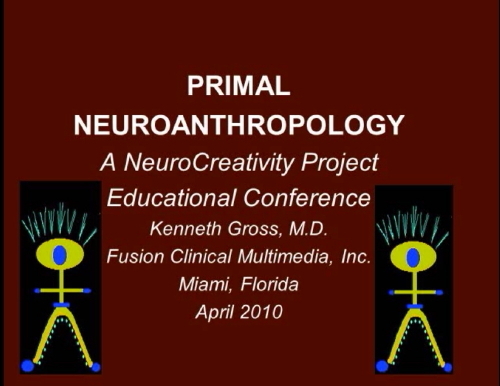
Click Here to Purchase: Primal Neuroanthropology© A Neuro-sports Hypothesis By Kenneth B. V. Gross, M.D..
Click Here to Purchase: Primal Sports II: A Psychoanalytical, Psychoneurological and Neurosociological Treatise with New Game, Myth, Philosophical and Satire Extras by Kenneth Bruce Van Gross, M.D.

The Bully Without and the Bully Within
I know very few people who have not been bullied in some way, to some degree, at some point in their lives, including myself. Bullying can be physical, emotional, verbal, taking place in person, behind someone’s back, and now on the internet. Such bullying is intended to intimidate, shame, diminish, and harm, all for the sake of power and control for the bully. We are taught that if we are young, we should turn to the adults in our lives for help and protection; if we are older, “hold our head high,” and act as though the bullying doesn’t matter; if we meet the bully on their own terms, we might succeed in ending the bullying or further harm could occur.
As we grow, while we unconsciously and consciously develop many psychological defenses, we have three fundamental biological defenses. From birth to about two and a half, our first such defense is “freezing” or “playing dead.” While an infant or young child might protest in some simple form (like crying, or later hitting or biting), their best option is to surrender in hopes the perpetrator will go away. The next defense comes on board from two and a half years to adolescence when the child has some mobility, the ability to run, and a rudimentary sense of time and space: time to get away (to flee) and find some other place to go (to hide). That doesn’t mean that a child might not fight back even at a young age, but it won’t do much good – they will be quickly overcome physically. Finally, in adolescence when strength is achieved along with height and weight, confrontation or fighting back can work, especially in domestic abuse when the teen can match a threatening parent. Many schools, churches, temples, and workplaces have zero tolerance policies in place to further protect victims. As much as these various approaches might be effective, we have another source of bullying to Continue reading The Bully Without and the Bully Within by Dr. Gweneth Erwin
Click Here to Read: On and Off the Couch: Memoir of a Psychoanalyst By Beverly Kolsky Reviewed by Eve Blake in American Association for Psychoanalysis in Clinical Social Work Newsletter 2032 Issue #1, pp. 4-6.
© 2023 All Rights Reserved. Reprinted from AAPCSW Newsletter, • 2023, issue 1 • www.aapcsw.org

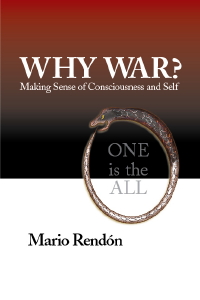
Click, Here to Read: Review of Why War?: Making Sense of Consciousness and Self, by Mario Rendón, International Psychoanalytic Books, New York, 2018, 663 pp. Cuneyt Iscan M.D. Reviewed in The American Journal of Psychoanalysis volume 82, pages488–493 (2022).
Click Here to Purchase: Why War?: Making Sense of Consciousness and Self, by Mario Rendón from IPBooks.net