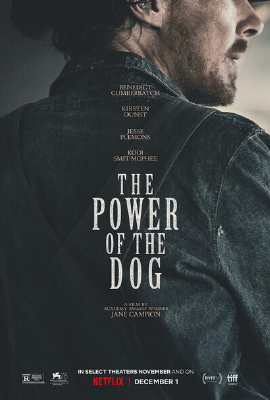
Click Here to Read: The Power on the Dog: Why Phil Burbank’s Cruelty Is About What He Hates in Himself by Sandra E. Cohen on Her Characters on the Couch blog pm December 07, 2021.
Click Here to Read: Jerusalem on the Rhine:: Preserving the history of three German cities that loom large in Jewish history: Speyer, Worms, and Mainz by Elisabeth Becker on the Tablet website on December 06, 2021.
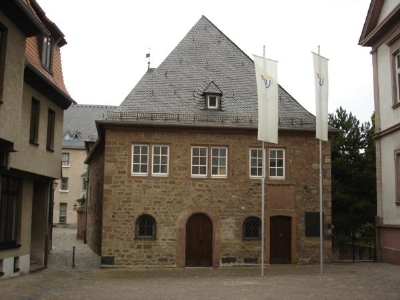
Synagogue in Worms (Rheinland-Pfalz, Germany).Image: Pancho Suenderhauf Public Domain via Wikimedia Commons.
NYPSI EXTENSION PROGRAM: Psychoanalytic Themes in Six Hollywood Films II with Thomas Wolman, M.D.
January 3 – February 14, 2022 Mondays, 7:00 – 8:15 pm 6 classes / $150 Fee Location: This course will be held virtually on ZOOM Click here, visit nypsi.org or call 212-879-6900 to register
NYPSI Extension Program: Psychoanalytic Themes in Six Hollywood Films II
This course will continue the psychoanalytic exploration of Hollywood films begun in the 2020-2021 year. Once again, we will examine six films in six different genres: wartime adventure, film noir, romantic thriller, melodrama, courtroom drama and “Hollywood” movie. This year’s collection includes several films from the 1950’s during the peak years of psychoanalytic interest among filmmakers. This year we will also link each film with a thematically similar film. We begin with the universally loved and much viewed “Casablanca” (1943). Another film, “Rome Open City” (1945) deals with the same antifascist theme from a radically different perspective. “Kiss Me Deadly” (1955) is, for me, the ultimate film noir. Surprisingly, it presents a critique of the male psychology in its “manifest content”. Other films such as “Gun Crazy” (1949), operate at the same level. “Imitation of Life” (1959) uses the practice of “passing” to address racism in the context of the 1950’s. We will compare it to the contemporary film, “Passing” (2020) available on Netflix. In the guise of an entertaining thriller, “Rear Window” (1954) presents a trenchant critique of the voyeurism that is part and parcel of the Continue reading Psychoanalytic Themes in Six Hollywood Films II with Thomas Wolman, M.D. Online with NYPSI
The Metropolitan Institute for Training in Psychoanalytic Psychotherapy, The Metropolitan Center for Mental Health and The Metropolitan Society of Psychoanalytic Psychotherapists Invite you to a Scientific Meeting
Sunday, January 9, 2022 – 2:30 PM – 4:30 PM FREUD, FANON, AND THE LANGUAGE OF POWER: IMPLICATIONS FOR THEORY AND TECHNIQUE
PRESENTER: DANIEL JOSÉ GAZTAMBIDE, PSY.D.
The history of psychoanalytic technique has evolved from the intrapsychic focus on the individual, to the interpersonal focus on the person in the context of their relationships, to the further contextualizing of these in politics, culture, and identity. Despite these advances, it is notable that while technique has evolved to include both an intrapsychic and intersubjective focus (with different inflections across, for example, Contemporary Freudian, relational, and Lacanian perspectives), theoretical developments with respect to the social have not yet been integrated into clear, practical technical innovations, aside from a general call to "consider" or "reflect on" issues of race, class, gender, and sexuality in the analytic relationship. This presentation will "return to Freud" and reposition some of the fundamentals of the psychoanalytic theory of the unconscious, language, and subjectivity, re-read through the work of Martiniquan revolutionary psychiatrist Frantz Fanon. It will be shown that Continue reading FREUD, FANON, AND THE LANGUAGE OF POWER: IMPLICATIONS FOR THEORY AND TECHNIQUE WITH DANIEL JOSÉ GAZTAMBIDE, PSY.D. at MITPP